
Dormant
Patient
Goldmine

note
I've spent 20 years in dental lead generation — Google Ads, Meta Ads, the full picture. For the last three, I've been building AI-powered patient reactivation systems specifically for UK dental practices.
This guide is not for everyone. It's for practice owners who already have a patient base, aren't looking to throw more money at ads, and suspect there's untapped revenue sitting in their PMS — they just haven't found a reliable way to get to it.
If that's you, keep reading. If you're after more Google Ads leads or a new website, this isn't the guide for you — and I'd rather not waste your time.
What follows is the exact playbook a single-site UK dental practice used to recover £103,600 from 1,180 dormant patients in 30 days — without a single new paid lead. I'll show you the framework, the numbers, and what they did differently.
— Carl Fox, Den Marketing
sat in your
PMS right now
The problem: Every UK dental practice has thousands of patients in their PMS who haven't been in for 18 months or more. They're paid up, consented, not deceased — just absent. And almost nobody is doing anything about them.
The agitation: While you're spending thousands on Google Ads chasing cold strangers, £100K+ of warm, already-trusting patients sit completely untouched in your own database. Here's what the maths looks like on a real campaign.
"And honestly? That's conservative."
The 28% reply rate came from properly segmented, personalised SMS — not a blast. The average treatment value of £4,709 reflects patients who'd been putting off bigger work for months or years: implants, Invisalign, bridgework, veneers. That's the real opportunity sitting dormant in your PMS right now.
Now, why does this happen? Not because the patients don't want to come back. Most of them do. It's because nobody's asked them properly.
letter is
dead
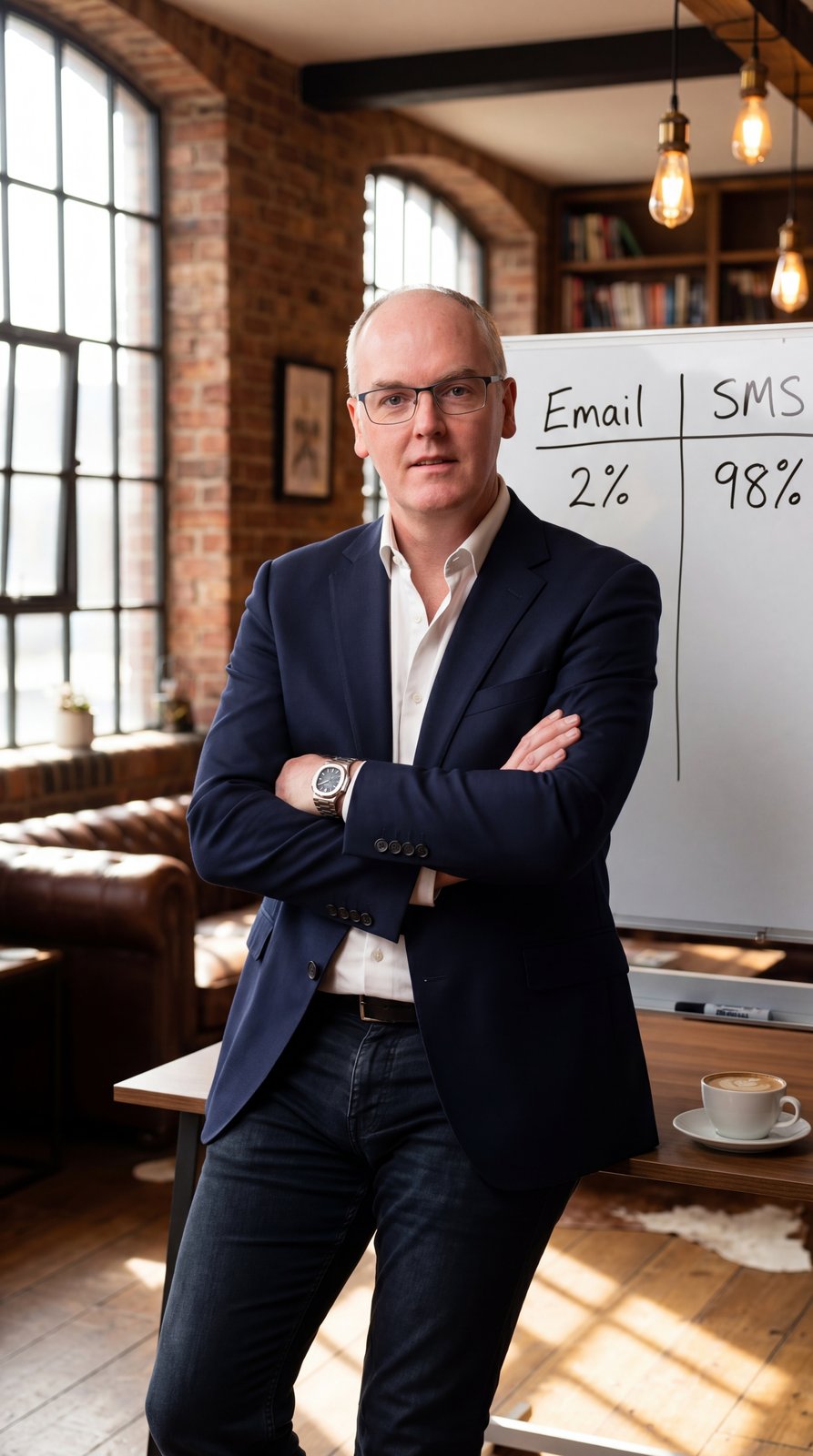
Has been for years, actually. The problem isn't intent — it's channel. People don't open post. They don't read generic NHS-style reminders. They ignore email from dental practices. But they do answer SMS.
Since 2020, patient behaviour shifted decisively. People text. They don't pick up calls from numbers they don't recognise. A phone call from reception on a Tuesday afternoon registers as spam before it's answered.
"If your reactivation strategy is a letter and a phone call from reception on a Tuesday, you're losing this game before you start."
The medium matters. The timing matters. And the message — as you'll see — matters most of all. A generic "we miss you, please book" lands in three categories of patient and connects with none of them.
reasons patients
go dormant
Had a baby. Moved house. Busy spell at work. They always meant to rebook. They just didn't. These patients need permission to come back without feeling guilty — no lecture, no "you've not been in for a while", just a warm open door.
Something put them off. Could be a previous appointment, could be longstanding dental fear. These patients need reassurance, not a sales pitch. Acknowledge the gap. Make it easy to come back on their terms.
They want to come in but they've priced themselves out in their head. These patients need to know about payment options before they'll book. Mention flexible finance early. Don't make them ask.
Each one needs a different message. A generic "we miss you" hits none of them.
This is why segmentation is the single most important factor in a reactivation campaign. The message has to match the reason — and you can make an educated guess about which category a patient falls into based on their history in your PMS.
to-lead
problem
Even when patients do respond to a reactivation message, most practices take 6 or more hours to reply. By then, the patient has moved on. Lost momentum. Gone to a competitor. Or just forgotten they were ever interested.
Industry data is clear: leads contacted within 5 minutes are 21 times more likely to convert than leads contacted after 30 minutes. That gap only gets worse from there.
"The reactivation game is won in the first 60 seconds, not the first 60 minutes."
This is the structural problem with leaving reactivation to your front desk. They're busy. They have patients in front of them. A reply that needs to go out at 9pm on a Sunday simply doesn't happen. That's not a staffing criticism — it's just reality. And it's precisely what AI solves.
changes
everything
Look, I know what you're thinking. "I don't want a bot talking to my patients."
Fair. Neither do I.
Here's the thing: the AI I'm talking about doesn't sound like a bot. It sounds like your best, most attentive receptionist — available 24 hours a day, responding in under 60 seconds, answering basic questions, and booking straight into your diary. The moment anything clinical comes up, it hands off to a human immediately.
"One client had a patient ring back to say thanks for the lovely chat with Sarah last night. Sarah was the AI."
The patient never knows. They just feel looked after. That's the bar — not "does this look like AI?", but "does this patient feel valued?" Because that's what brings them back.
framework
Pull the right dormant patients from your PMS. Not a raw list dump — a cleaned, segmented extract. Deceased removed. Opt-outs removed. Sorted by how recently they were last seen and what treatment they received.
The first message that actually gets a reply. Named. Segmented. A question, not a pitch. Short enough to read in three seconds. Sent on the right day (Tuesday–Thursday, never Monday or Friday).
AI handles the conversation. Qualifies intent. Answers questions. Books into your live diary — 24 hours a day, 7 days a week. Hands over to your front desk for anything clinical.
Your front desk receives the handover warm. Patient name, conversation history, reason for interest. No cold calling. No chasing. Just a briefed team ready to confirm the appointment.
reactivation
campaign
Single-site UK dental practice. Mixed NHS/private. Around 2,800 patients on the books. Dormant list once cleaned: 1,180 patients last seen 18–36 months ago.
22 closed treatment plans at an average of £4,709. Not check-ups — patients who'd been putting off serious work. The breakdown tells the real story:
What worked
Named the dentist by first name in message 1
Asked a question rather than pitching a booking
Sent Tuesday–Thursday only — never Monday or Friday
AI replied within 60 seconds — including 9pm and weekends
Three-message follow-up cadence — most bookings came on message 2 or 3
numbers for
your practice
Pull two figures from memory. How many patients haven't been in for 18 months or more? And what's your average treatment value across restorative and cosmetic work?
Now multiply.
"Whatever number you just landed on — that's roughly what's sat in your PMS right now. Not theoretical. Not 'potential'. Already-paid-for relationships you've forgotten about."
The bottom line in that formula isn't a projection — it's the actual result from a real UK practice. The third row is the case study in this guide. Your numbers will differ, but the principle holds: dormant patients who've been putting off serious work represent far more value than a hygiene check-up list suggests.
practices make
when trying this
No segmentation means no relevance. "We miss you" to a patient with dental anxiety is meaningless. Same message to a lapsed hygiene patient and a patient who got a £4k treatment plan quote lands completely differently.
The first message should never lead with a booking link. It should open a conversation. Ask a question. Create a moment of human contact. The booking comes after the response, not before.
No name, no context, a generic shortened link. Patients delete it in two seconds. The format signals its own irrelevance before the copy even lands.
Sending a campaign and leaving it to the front desk to field replies — when they're already busy — kills the momentum. Every hour of delay is conversions walking out the door.
Most reactivations happen on message 2 or 3. If you send once and stop, you've done 40% of the work for 10% of the result.
this week
Pull a list of patients last seen between 18 and 36 months ago. Export from your PMS, remove deceased and opted-out records.
Segment it. Hygiene-only patients in one group. Restorative or treatment-planned patients in another.
Write three different opening messages — one for each dormant reason. Name the dentist. Ask a question. Keep it under 80 words.
Send 50 as a test. Track your reply rate. Iterate the message that underperforms.
Have someone available to respond within 30 minutes — ideally faster. Don't let replies go cold.
"If you do nothing else after reading this, do that. It'll pay for itself before the weekend."

works on your
patients first
Your database is full of patients who already trust you. They've been to your practice. They just need a nudge. For £27, you get the exact words that deliver that nudge — and turn forgotten patients into booked appointments.
The scripts are ready. Your database is waiting. The only question is whether you act on it today.
Hi [First Name], it's [Practice Name] here.
We noticed it's been a while since your last visit —
we'd love to get you back in. Reply YES and we'll send you our next available slots. 😊
Hey [First Name]! Just following up — we have a slot this week if you’d like to pop in. No pressure at all 👋
Fully shareable — forward directly to your practice manager or reception team. They can start sending within the hour.
"We sent the SMS scripts to 400 patients on a Tuesday afternoon. By Thursday we had 23 new appointments booked. I couldn't believe how straightforward it was — the scripts are genuinely copy and paste."
"I was skeptical about WhatsApp for patient outreach. But the scripts are written so naturally that patients replied thinking it was coming from the receptionist personally. Booked 11 hygiene appointments in the first week."
"We sent the first 100 — which was the free test to be honest — I wasn't expecting a massive response from just so few. However 17 responded, 9 booked an appointment, and we closed four Invisalign cases that week. Booking an extra £16,000 worth of treatment we had on our books but just hadn't bothered to reactivate."
Everything you need to reactivate your dormant database yourself — copy, paste, send. No agency. No setup fees.
Battle-tested across major UK dental practices. We track conversion rates on every script — in some cases, a single messaging tweak delivered a 20% uplift in replies. What's in this toolkit is what survived that testing.
Proven SMS scripts — segmented by patient type. Copy. Paste. Send.
WhatsApp follow-up sequence — 3-message cadence for patients who didn't reply first time
Voicemail drop script — word-for-word for patients who need a human touch
PMS export + segmentation guide — pull and clean your list in under 30 minutes
Toolkit buyers also qualify for:
A Free Live Reactivation Test — 100 of your patients, on us
We contact 100 of your dormant patients using the full AI system — at our cost
You see real reply rates, real conversations, real bookings — on your actual patients
Every pound those 100 patients generate is yours to keep. No commission. No catch.
Then decide whether to roll out to your full list. Zero pressure either way.